Why Metal Analysis Remains a Critical Issue in Laboratories?
Across various fields such as environmental monitoring, industrial processing, food safety, and healthcare, the demand for accurate metal concentration data continues to grow. While metals are essential at certain levels, excessive concentrations can pose serious risks to human health and the environment. Therefore, analytical methods that provide specific, sensitive, and reliable results are required. One technique that remains widely used today is Atomic Absorption Spectrophotometry (AAS), which is broadly recognized as a standard method for metal analysis.
Scientific Basis of AAS: How Atoms Absorb Light
To understand why AAS delivers accurate analytical results, it is important to first examine its fundamental operating principle. AAS is based on the ability of free atoms to absorb electromagnetic radiation at element-specific wavelengths. This unique characteristic allows selective determination of individual metal elements, even within complex sample matrices.
The analytical process begins with atomization, during which metal species in the sample are converted into neutral atoms in the gas phase. Atomization is achieved by supplying sufficient thermal energy, either through a flame or a graphite furnace, to break chemical bonds within metal compounds. Once converted into free atoms, these species are ready to interact with radiation from a dedicated light source.
The radiation used in AAS is generated by a hollow cathode lamp, which emits characteristic wavelengths corresponding to the element of interest. As this radiation passes through the atomic vapor, a portion of the light is absorbed by the target atoms. The extent of light absorption follows the Lambert–Beer law, where absorbance is directly proportional to the concentration of atoms within the optical path. This relationship forms the basis for quantitative metal determination using AAS.
The radiation that is not absorbed is detected and converted into an electrical signal. This signal is processed by the instrument’s electronic system to produce an absorbance value. However, this value does not directly represent metal concentration and must be compared against calibration standards. Consequently, AAS performance relies not only on atomic absorption but also on accurate calibration to ensure reliable and reproducible results.
From Sample to Result: The Complete Workflow of Metal Analysis Using AAS
To obtain accurate and defensible analytical results, metal determination using AAS must follow a structured and systematic workflow. Each stage plays a critical role and is closely interconnected, making proper execution essential for overall data quality. The main steps involved in AAS-based metal analysis are outlined below.
- Sample Collection
The first step in the analysis is the collection of representative samples. Samples should be collected using clean, metal-free containers, such as plastic or glass bottles that have been rinsed with dilute acid and deionized water. For water samples, preservation is commonly achieved by acidifying with nitric acid to maintain metals in solution and prevent precipitation. Proper handling at this stage is critical, as errors during sampling can significantly affect subsequent analytical results.
- Sample Preparation
Sample preparation aims to convert the sample into a homogeneous solution suitable for AAS measurement.
- Liquid samples, such as water or industrial solutions, typically require filtration and acidification only.
- Solid samples, including soil, sediment, or food materials, require a digestion process using strong acids and heat to ensure complete dissolution of metal constituents.
After preparation, the solution is diluted to a defined volume using metal-free water. This step ensures that the analytes are present in a stable form and within the working range of the instrument.
- Preparation of Standard Solutions
Standard solutions are prepared to calibrate the instrument. These solutions are derived from certified stock solutions with known concentrations and diluted to produce a series of calibration levels. The concentration range of the standards should bracket the expected metal concentrations in the samples. In addition, the matrix of the standards should closely match that of the samples to minimize matrix effects during measurement.
- Sample Measurement
Sample solutions are measured under the same instrumental conditions used for the standards. Measurements are typically performed in duplicate or triplicate to improve analytical precision. If the sample absorbance falls outside the calibration range, further dilution is required, followed by reanalysis. This step ensures that results remain within the validated accuracy limits of the AAS method.
- Calculation of Metal Concentration
Sample absorbance values are converted into concentrations using the regression equation derived from the calibration curve. The calculated concentration is then corrected for dilution factors and the original sample mass or volume. Final results are reported in appropriate units, such as mg/L for liquid samples or mg/kg for solid samples.
Which Metals Can Be Analyzed? Understanding AAS Target Elements
One of the primary strengths of Atomic Absorption Spectrophotometry (AAS) is its ability to analyze a wide range of metal elements with high selectivity. Both essential metals and toxic heavy metals can be effectively determined using this technique.
- Alkali and Alkaline Earth Metals
Alkali and alkaline earth metals are among the most frequently analyzed elements by AAS. Elements such as sodium (Na) and potassium (K) are commonly measured in drinking water, industrial water, and biological samples. Calcium (Ca) and magnesium (Mg) are widely analyzed in water, food products, and dietary supplements.
- Transition Metals
Transition metals play important roles in biological and industrial processes. Iron (Fe) is frequently analyzed in water, food, and industrial raw materials. Copper (Cu) and zinc (Zn) are commonly determined in industrial products, wastewater, and food samples, while manganese (Mn) and nickel (Ni) are often monitored in environmental and industrial materials.
- Toxic Heavy Metals
AAS is particularly valuable for the determination of toxic heavy metals that pose health and environmental risks. Lead (Pb), cadmium (Cd), and mercury (Hg) are commonly analyzed in drinking water, soil, sediment, and food products. Arsenic (As) and chromium (Cr)—especially hexavalent chromium—are also frequently monitored due to their toxic and carcinogenic properties.
A Reliable Instrument for Routine Analysis: The Role of AAS in Modern Laboratories
AAS remains a key analytical instrument for metal determination due to its ability to deliver accurate and element-specific results. The technique is especially well suited for analyses involving one or a limited number of target metals, offering a relatively simple and user-friendly analytical system. Moreover, AAS methods have been incorporated into numerous analytical standards, ensuring regulatory acceptance and reliability for routine laboratory testing.
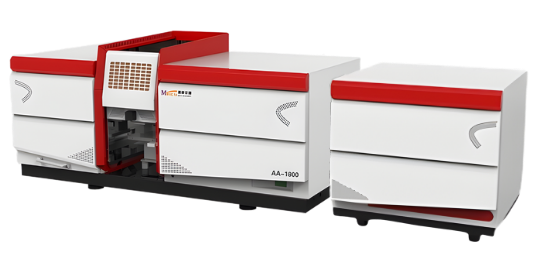
To support effective and accurate AAS analysis, Macylab Instruments AAS systems are designed with stable measurement performance and intuitive operational control. These instruments support both flame AAS for routine analysis at medium to high concentration levels and graphite furnace AAS for trace metal determination requiring high sensitivity. This flexibility allows laboratories to tailor their analytical approach to different sample types and testing requirements. For further information regarding our AAS instruments, please contact our team.