Understanding the PCR Technique
PCR (Polymerase Chain Reaction) is a molecular technique used to rapidly and efficiently amplify specific segments of DNA. This method allows for the amplification of genetic material in large quantities so that it can be further analyzed. PCR is often used in various fields, including medical diagnostics, molecular biology research, forensics, and genetic studies. The basic principle of PCR involves the amplification of DNA through a thermal cycle consisting of three main stages: denaturation, annealing, and elongation.
Applications of PCR in Modern Science
PCR is widely used in many application areas, including food testing, forensics, molecular biology, and molecular clinical diagnostics. PCR identifies genetic disorders, infections, and genetic mutations, including infectious diseases like COVID-19, and tuberculosis. It is utilised in molecular clinical diagnostic testing to detect specific target genes. In addition, PCR is crucial for food safety testing, such as analysing pork DNA to confirm a product’s halalness or detecting food safety-related diseases to make sure items are uncontaminated.
Key Feature of FastGene® Ultra Cycler Gradient
We provide the FastGene® Ultra Cycler Gradient, which is manufactured from Germany and is built in accordance with laboratory standards to ensure accurate test results, to satisfy your laboratory’s PCR demands for DNA analysis. This PCR is equipped with a Powerful Thermal Engine that ensures precise and rapid temperature control, as well as a Heated Lid Evaporation Control feature that prevents sample evaporation during the amplification process. Its Compact Footprint design allows for efficient use of laboratory space, while the Touch Screen Graphical User Interface provides ease of operation and programming of the device. Additionally, USB Connectivity allows for easy and fast data transfer, making it an ideal solution for modern research needs.
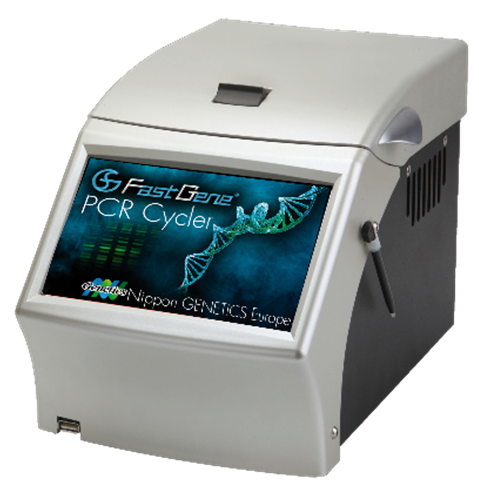
In molecular biology test especially when using samples with different DNA sequences, it is very important to determine the optimal temperature so that the DNA amplification process can occur maximally. Therefore, the correct annealing temperature is essential to ensure the specificity and efficiency of the reaction. The temperature regulation of the FastGene® Ultra Cycler enables a temperature gradient of 24 °C across 12 lanes. With the temperature calculator a very precise determination of the temperature of each lane enables the rapid determination of the optimal primer annealing temperature.
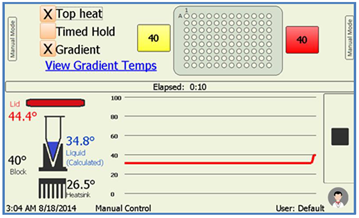
The gradient function allows you to optimise your reactions. Discover the best annealing temperature over a range of 24 °C. The block system is designed for the use of 96 individual PCR tubes. Ultra Cycler combines the latest electronics and peltier technology with unusually high operating comfort. With a huge touchscreen interface and simple programming, this system is convenient and easy-to-use. As a small and robust device, the FastGene® Ultra Cycler is perfect for any lab environment by providing years of reliable amplification.
Source:
https://www.nippongenetics.eu/en/products/lab-instruments/thermal-cycler/fastgene-ultra-cycler/
https://labcito.co.id/pemeriksaan-pcr/
https://www.ncbi.nlm.nih.gov/probe/docs/techpcr/
https://www.siloamhospitals.com/informasi-siloam/artikel/apa-itu-tes-pcr
Fadhilah N dan Arief R, 2022. Prediksi Jumlah Sampel Tes PCR Covid-19 Menggunakan Metode Single Moving Average. Bulletin of Informatics and Data Science. 1(2): 1-9.