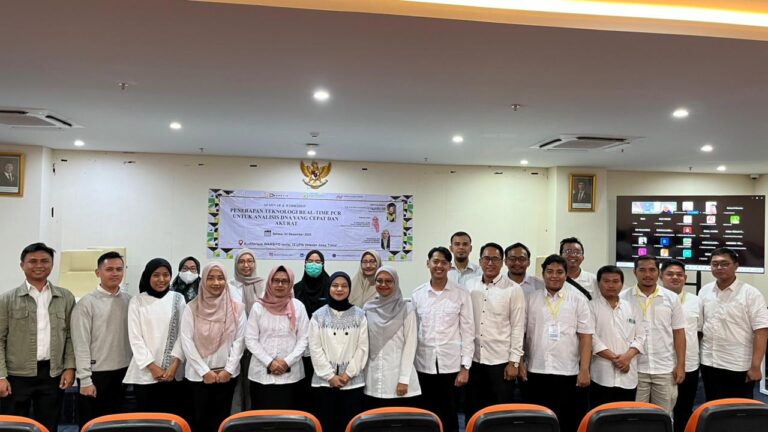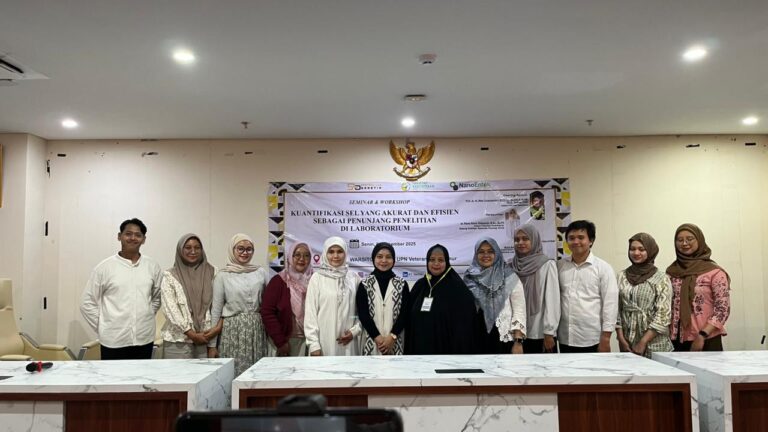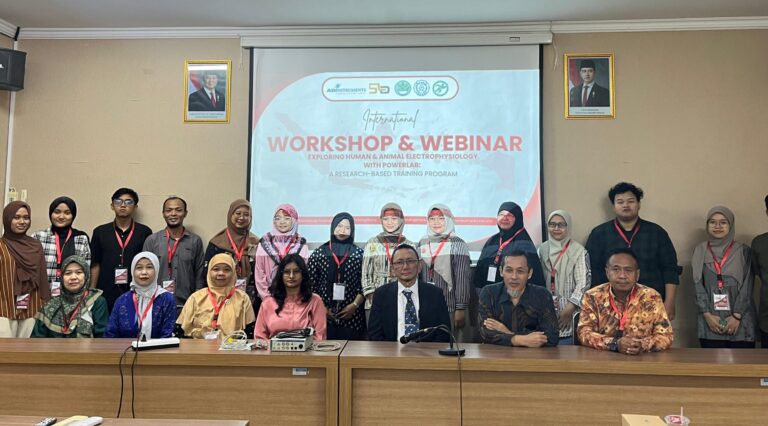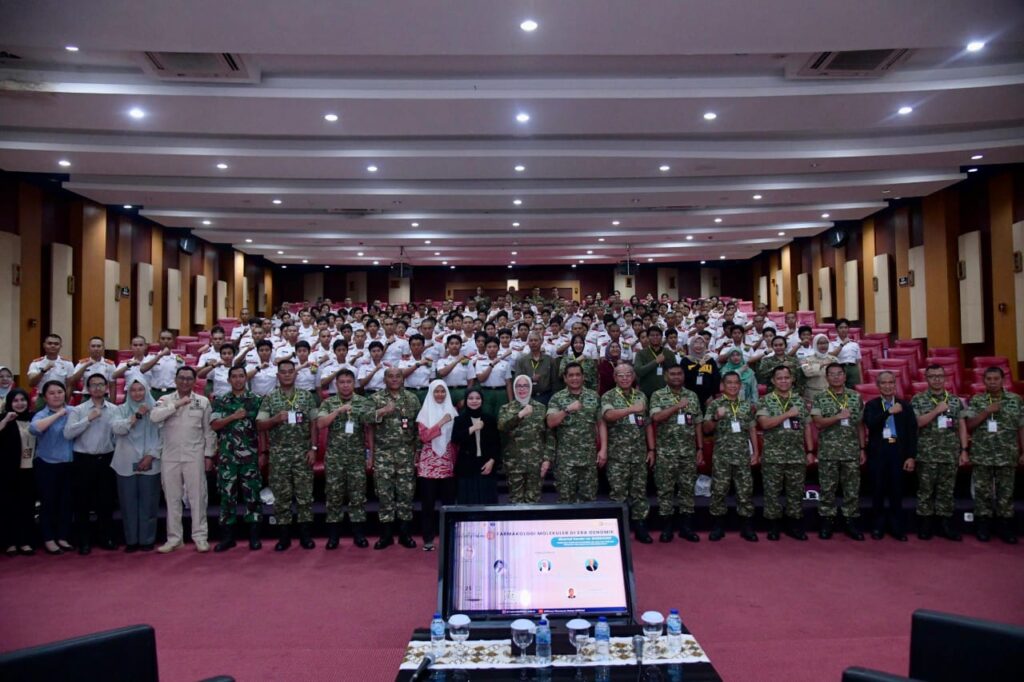
Bogor, 25 November 2025 — The Faculty of Pharmacy, Universitas Pertahanan Republik Indonesia (UNHAN RI), organized a Kuliah Pakar (Expert Lecture) entitled “Farmakologi Molekuler di Era Genomik (Molecular Pharmacology in the Genomic Era).” This academic event aimed to enhance students’ and researchers’ understanding of the role of molecular genetics in modern pharmacology and its application in pharmaceutical research and healthcare. As part of the event series, PT Sentral Lab Genetik participated as a laboratory technology provider supporting molecular pharmacology education and research by introducing advanced and safer laboratory solutions.
The first session was delivered by Dr. rer. nat. apt. Catur Riani, S.Si., M.Si, who addressed the growing challenge of antimicrobial resistance from a molecular biology perspective. She presented quantitative PCR (qPCR) as a sensitive and reliable method for detecting and analyzing antibiotic resistance genes such as blaTEM, mecA, tetA, and others. Through this approach, researchers can monitor gene expression, study resistance dynamics, and evaluate the effectiveness of antibacterial compounds. She also highlighted the importance of accurate DNA detection and visualization as an integral step in molecular workflows.
The second session was presented by Prof. apt. Zullies Ikawati, Ph.D, an expert in pharmacogenomics. In her lecture, she explained how genetic variations play a crucial role in determining individual responses to drug therapy. Differences in genes encoding drug-metabolizing enzymes, transporters, and molecular targets can significantly influence drug efficacy and the risk of adverse drug reactions. She emphasized that, in the era of precision medicine, understanding molecular and genetic factors is essential for developing safe, effective, and personalized therapeutic strategies.
As part of its contribution to supporting molecular pharmacology, PT Sentral Lab Genetik delivered a dedicated session presented by our Aplication Manager, Mutia Balqis, S.Si. She was presented about “DNA Detection and Visualization Without UV Using Blue/Green LED Technology on the FAS-X Gel Documentation System”. This session emphasized that Polymerase Chain Reaction (PCR) plays a vital role in molecular pharmacology research. In educational institutions, conventional PCR is widely used to support lectures, laboratory practical sessions, and basic molecular biology research. Within the PCR workflow, DNA detection and visualization are critical steps to confirm successful amplification. Therefore, visualization technologies that are both sensitive and safe are essential, particularly in academic laboratory environments. To address this need, a UV-free DNA visualization solution using Blue/Green LED technology integrated into the FAS-X Gel Documentation System was introduced as a safer and more modern alternative to conventional UV-based gel documentation systems.
In addition to the theoretical presentation, the session was followed by a hands-on workshop (practical session) entitled “Application of Blue/Green LED Technology on FAS-X as a Replacement for UV-Based DNA Visualization.” During this workshop, participants were able to directly observe DNA visualization using Blue/Green LED technology and perform hands-on operation of the FAS-X system. The practical session allowed participants to experience firsthand the advantages of LED-based imaging, including improved safety for users and preserved DNA integrity, making it highly suitable for routine use in educational and research laboratories.
Appreciation and Future Collaboration
PT Sentral Lab Genetik would like to express its sincere appreciation to the Faculty of Pharmacy, Universitas Pertahanan RI, for the opportunity to collaborate in this Expert Lecture and workshop. It is hoped that this seminar and hands-on workshop will provide meaningful benefits for participants by strengthening their understanding of molecular pharmacology concepts and introducing safer, more advanced laboratory technologies.
Looking ahead, PT Sentral Lab Genetik hopes that this collaboration with UNHAN RI can continue and expand in the future to further support education, research, and the development of molecular laboratory technologies in Indonesia.